
By Ellie Kelly
Today, the parking garage at 1 Talcott Plaza is nothing but a liminal space in the day of Hartford residents. They park their cars, go about their business in Hartford, and return without a second thought of where they stand. But just about 200 years ago, the very same space that now exists as no more than a matter of convenience was once hallowed ground. The rousing harmony of hymns, the laughter of schoolchildren, the hushed whispers of revolution, and the beating hearts of those longing for community are the sounds that resonate through the soul of this site. All of these and more are the memories lost in the confines of history — the memories of the Talcott Street Congregational Church.
In September of 2022, just a few doors away from where this church once stood, Capital Community College dedicated a permanent exhibition within the Conrad L. Mallett Gallery to the forgotten legacy of it and its iconic congregation members. This exhibit, as curated by Frank Mitchell, is known as The Nutmeg Pulpit. This exhibit, though small in size, does much to honor the rich history of not only the Talcott Street Congregational Church, but of the city of Hartford itself.
The Talcott Street Congregational Church began its life as The African American Religious Society of Hartford, which was founded in 1819 by a congregation of Black worshippers of the First Church of Christ who tired of being segregated to the furthest seats during services. Though the congregation had moved from the church’s conference room to State Street in 1820, it gained its own property in 1826, when a building was constructed to house it on Talcott Street. Throughout this time, the church was not just a house of worship. It served triple duty, additionally becoming the first schoolhouse to educate Black students in Hartford as well as a central meetinghouse for abolitionist movements of the era (WHERE WE COME FROM).
Changing names over the years from First Hartford Colored Congregational Church in 1839 to Talcott Street Congregational Church in 1860, the congregation continued to grow in size. It eventually needed to be demolished for a larger house of worship. In 1906, Rev. Robert F. Wheeler, who had been pastor for 20 years, proclaimed “Although the name of this organization has changed at different times, the property has belonged to the same people and has been used for the same purpose.” In the years to come, Rev. Dr. James A. Wright would merge the congregations of Talcott Street Congregational Church and Mother Bethel Methodist Church into what is as of 1953 known as Faith Congregational Church. A year after, the 500 member congregation moved to Main Street, and in the following year the historic building on Talcott Street was demolished. To this day, Faith Congregational Church continues to thrive, despite history paying no mind to its impact on the lives of Hartford’s population (WHERE WE COME FROM).
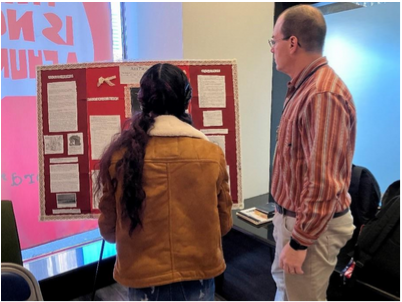
The Nutmeg Pulpit seeks to change that fact by memorializing the legacy of the church, and I believe it does so effectively. The space in which the installation resides has its walls covered in squares of purple, yellow, orange, white, and black. In one of these squares is a series of bios describing the lives of icons of the church including James Mars, Rev. James W.C. Pennington, Ann Plato, Rebecca Primus, and Augustus Washington. The rest of the squares are adorned with quotes from their writings and speeches, as well as pictures of items and people associated with them. The left wall contains a brief background on the freedom of the Black population of Hartford and a projection show of many important locations to Black history in many of Connecticut’s towns. Additionally, there is a gallery guide that elaborates on the information presented, provides the stories of even more church icons, and details the lack of standing monuments in Connecticut to Black and Indigenous historical figures (Gallery Guide). In the room stands a pulpit to serve as a photo-op for guests. As of writing, there is also a student-made poster board in the exhibit focusing specifically on Ann Plato.
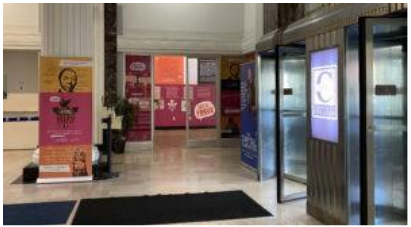
A visit to The Nutmeg Pulpit is informative and peaceful. The room itself is very empty, as there are no artifacts and not much foot traffic coming through. This is to the visitor’s benefit, as there is nothing preventing you from hearing the audio of the projection show and no rush to complete the exhibit at anyone’s pace but your own. Visiting the exhibit gives a window into a history more Hartford residents should be made aware of, as the memory of times before us is one of our most vital resources as a member of society. Additionally, the legacy of these figures is one of great importance, and one that fails to be recognized in many commemorations of Connecticut’s past from classrooms to museums. This makes The Nutmeg Pulpit a very unique experience which offers a wider lens on our past. It is not a major time commitment to visit, and depending on your personal pace can take 15 minutes or less. Though you likely cannot make a full day out of a visit to it, it can be a brief yet impactful part of a larger day in downtown Harford.
It is true that this exhibit is quite small and is not so much a history lesson as it is a window into the lives of the lost icons of Hartford’s past. However, this does not mean it isn’t a valuable resource when paired with supplemental education. If you would like to learn more about this chapter of Hartford’s story, I urge you to continue learning by reading sources such as the Liberal Arts Action Lab’s website on the Black Heritage Project and the writings of those detailed in the exhibit, as well as visiting locations such as the Connecticut Old State House and Faith Congregational Church. Though further individual research is needed for a complete picture, I would recommend The Nutmeg Pulpit as an excellent springboard for any Hartford resident interested in learning the deep heritage of the city.
The Nutmeg Pulpit is located on the first floor of Capital Community College at 950 Main Street, Hartford CT in the Conrad L. Malett Gallery. Hours of operation are Monday-Thursday 8AM-8PM, Friday 8AM-4:30PM, and Saturday 8AM-1:30PM. Admission is free.
Works cited:
Gallery Guide. The Nutmeg Pulpit: Hartford’s Talcott Street Church and Black Community Formation. Sept. 2022 – indefinite, CT State Community College Capital, Hartford.
“The Nutmeg Pulpit.” CT State Capital, http://www.capitalcc.edu/hhp/nutmeg-pulpit/. Accessed 7 Dec. 2023.
The Nutmeg Pulpit: Hartford’s Talcott Street Church and Black Community Formation. Sept. 2022 – indefinite, CT State Community College Capital, Hartford.
“WHERE WE COME FROM.” Faith Congregational Church, faithmatterstoday.org/visitors/oldest-black-church-in-hartford/. Accessed 7 Dec. 2023.
Course: ENGL1010 Fall 2023
Assignment: Evaluation
Instructor: Jeff Partridge
Instructor comments: Ellie’s essay is a well written and insightful evaluation of the Nutmeg Pulpit exhibition in the lobby of our college that commemorates Hartford’s first Black church and school for Black children. Ellie provides relevant historical details that highlight the significance of the exhibit for the college and for Hartford. My favorite parts are the introduction that draws the reader in and establishes the importance of the topic and the realistic acknowledgement of the exhibit’s limitations, with recommendations on how to make a visit to the Nutmeg Pulpit a part of a fuller day of Hartford exploration.
Photo Credit: Ellie Kelly


Leave a Reply