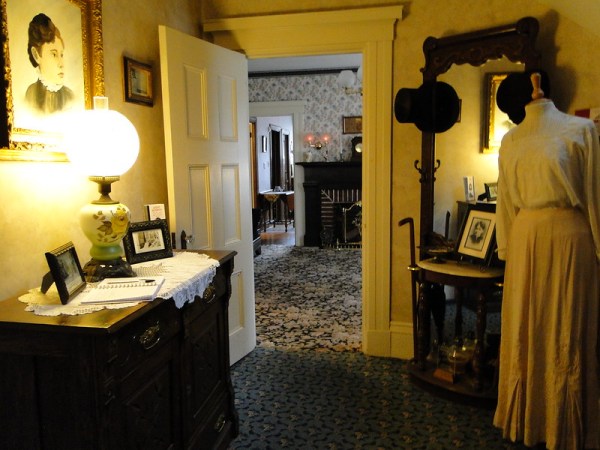
By Kristina Oquendo As the lights dimmed in the theater, quiet eerie whispers of “Lizzie Borden took an axe, gave her mother 40 whacks, when she saw what she had done, gave her father 41” filled the room. As the nursery rhyme continued on, the space was illuminated with white light and ghostly projections of... Continue Reading →
War Never Changes: But Nobody Ever Knows
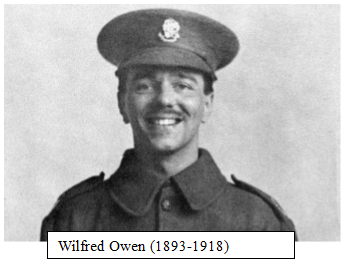
By Spencer Jahn Wilfred Owen was an English soldier who fought for his country in World War I. During his service, he first wrote a draft of his famous poem Dulce Et Decorum Est somewhere between the fall of 1917 and 1918. He later revised this poem, and it was published posthumously after his death... Continue Reading →
Voices of Hartford: Poetry of Ann Plato and Lydia Sigourney
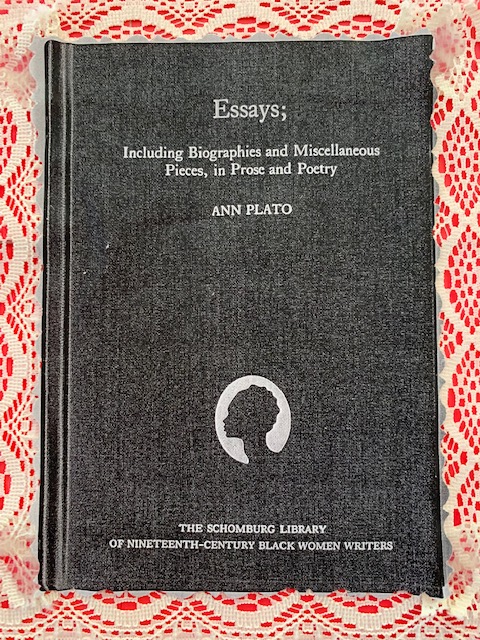
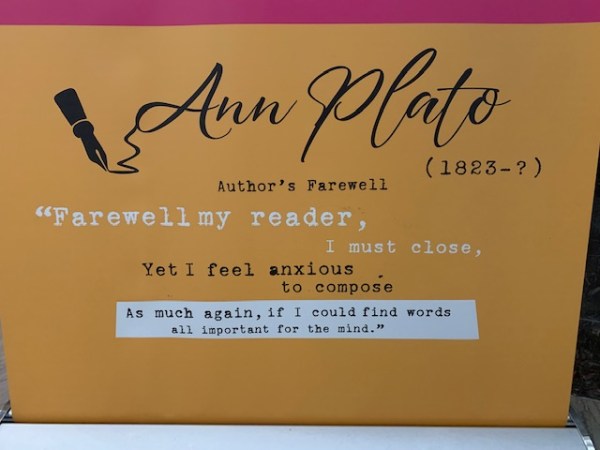
By Linamaria Perez Ann Plato and Lydia Sigourney were two influential poets who lived and wrote in Hartford, Connecticut, during the 19th century. While Plato, an African American woman, remains lesser known today, Sigourney was widely published and celebrated in her time. Despite their differences in audience and recognition, their works offer rich insight into... Continue Reading →
When the Only Cause of Our Barrenness is Our Own Indolence
By Katie Cook And as imagination bodies forthThe forms of things unknown, the poet’s penTurns them to shapes and gives to airy nothingA local habitation and a name. (V.i. 15-18) These lines, spoken by Theseus in William Shakespeare’s A Midsummer Night’s Dream, are a description of the craft of poetry; the art of using figures... Continue Reading →
Keeping Memories Alive
By Isla Sadzak Our memories are what shape our identities, and therefore, what we remember and share with others holds great significance. One important figure from Hartford, Connecticut during the 19th century was Ann Plato, a remarkable young Black woman who was an educator, an essayist, and a poet and one of the first Black... Continue Reading →
Secrets of the North
By Nathanial Gardner Atlas of the city of Hartford 1909 The play Take a Giant Step, written by Louis Peterson, is a powerful and hidden gem set in the city of Hartford, Connecticut. One of the main topics that the play touches on is “place.” A quote by Edward Casey states, “There is no place... Continue Reading →
Religious and Political Cruelty: Creating Weeping Children and Little Vagabonds in William Blake’s Songs of Innocence and of Experience
By Gillian Williams Blake was an instrumental poet during the nineteenth century, and he could arguably be considered one of the most powerful social critics because of his focus on the rampant corruption and hypocrisy that existed in the English society. In the Songs of Innocence and of Experience, he presents a dual-focus approach to man’s propensity... Continue Reading →
American Son: A Story of Love, Identity, and Loss
By Irene Cucuta It’s 4AM and Kendra Ellis-Connor is sitting in a police station, she keeps looking at her phone like she’s waiting for an important phone call or text. The look on her face is one of concern, fear, and despair. You can hear the rain coming down hard as it hits the glass... Continue Reading →
Equality: From Dreaming to Demanding
By Johann Smith As conscious beings we observe our surroundings, reminisce about the past, and anticipate the future. Culture is our form of expression that encompasses everything from language to the arts. The art that emanates from our souls is deep and far reaching. It is used to inspire and to tell a story of... Continue Reading →
Evaluation of a Live Play: A Midsummer Night’s Dream
By Khalif Willis In the live play A Midsummer Night’s Dream, the opening scene is when Egeus who is the father of Hermia, gave Demetrius consent to marry Hermia; instead, she wanted to marry Lysander. Egeus was trying to get the duke of Athens, Theseus, to go ahead and marry Demetrius and Hermia. But she... Continue Reading →