
By Carlos Diaz
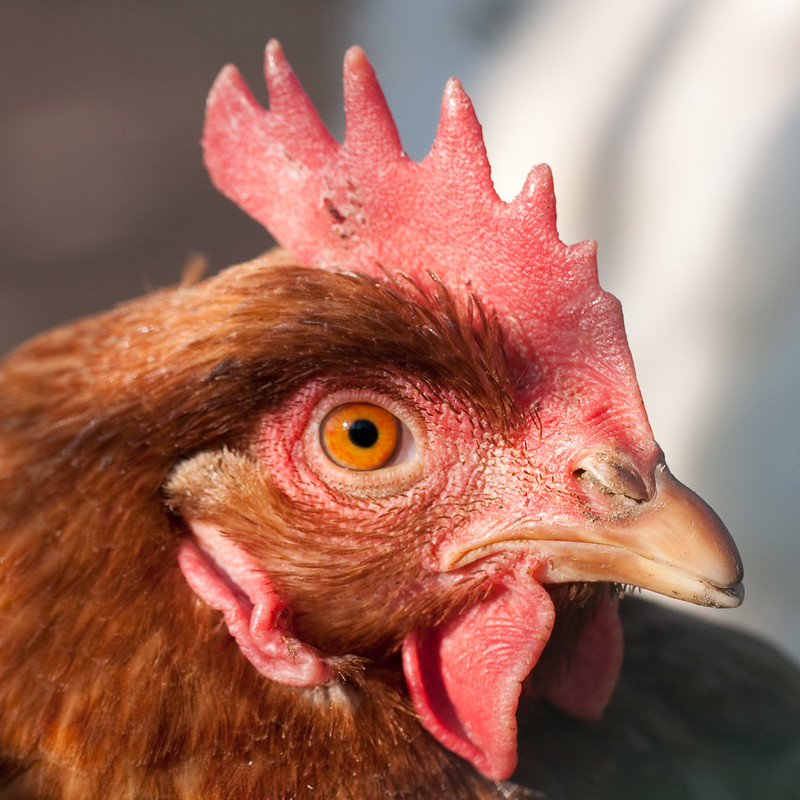
Do you eat meat? Yes? Now do you look the animals in the eyes while you devour them? It’s a jarring question, but one that forces us to confront the uncomfortable disconnect between what’s on our plate and where it came from. We often consume meat without thinking about the lives behind it, treating animals as products rather than living beings. This mindset allows people to distance themselves from the ethical weight of eating animals. But what if we shifted our perspective—not to stop eating meat, but to respect the animals it comes from? In An Animal’s Place, a chapter within Michael Pollan’s widely acclaimed book, The Omnivore’s Dilemma, Pollan presents a nuanced argument in favor of eating animals, provided they are treated humanely.
While he challenges radical animal rights ideologies, Pollan still centers the human experience, ultimately justifying meat consumption through a lens of opportunism and personal connection to the food chain. However, his argument falls short in addressing the deeper ethical responsibilities we owe to animals—not just in how they live, but in how we relate to them as fellow beings. Rather than rationalizing the consumption of meat through tradition or natural order, we must embrace an ethic of respect. We must acknowledge animals as complex creatures worthy of dignity, even as we include them in our diets. This approach shifts the focus from mere justification to accountability and reverence, aligning more closely with evolving understandings of animal consciousness, ecological urgency, and emotional interconnection.
In their critique of The Omnivore’s Dilemma, the podcast Maintenance Phase exposes contradictions in Michael Pollan’s reasoning that directly challenge the notion of respectful meat consumption. Hosts Michael Hobbes and Aubrey Gordon argue that while Pollan paints a romantic picture of small-scale, pasture-raised farming, he largely ignores the entrenched realities of industrial meat production that dominate the market. They point out that his “conscious carnivore” identity often serves more to soothe the conscience of privileged consumers than to inspire meaningful systemic change. As Gordon states, “It’s not radical to buy better meat; it’s just rebranding the same exploitative system with a nicer label” (Gordon). This perspective pushes us to think more critically about what respect truly entails. If we claim to honor the animals we eat, that respect must go beyond personal feelings of virtue. It must extend into our advocacy, our consumption habits, and our willingness to confront uncomfortable truths. Respecting animals doesn’t mean clinging to idyllic farm imagery—it means engaging with the full weight of taking a life for sustenance and challenging systems that reduce living beings to commodities. Real change demands that we not only rethink how we eat, but how we participate in the structures that produce our food.
While Pollan’s reasoning may fall short, my own upbringing offered a different framework—one rooted in reverence rather than rationalization. I grew up beneath the golden sun and emerald hills of Puerto Rico, where mornings began with the lowing of cows and the gentle clucks of hens and the yells of roosters. Our family farm wasn’t just land—it was sacred ground, woven with the wisdom of my Taíno ancestors passed down to my grandmother. She taught me to walk softly, to speak gently, and to listen to the animals as if they were elders with stories to share. She believed the earth was alive, that the animals were our brothers and sisters, not resources. “Míralos a los ojos,” she’d whisper. Look them in the eyes. Every goat, pig, or chicken had a name—a spirit, with a place in our world. She taught me how to feed them with care, how to clean their pens with dignity, and when the time came, how to honor them in death. When we harvested a life for food, we didn’t do it without ceremony. We gave thanks.
We offered tobacco to the earth and whispered blessings. I learned that taking a life for sustenance wasn’t something to do lightly. They were not just meat—they were life. A soul that had given itself for ours. That awareness never left me. And now I ask you again: Do you eat meat? Yes? Now do you look them in the eyes while you devour them? In our modern world, we often consume meat without a second thought, as though it appeared in plastic trays without breath or blood. We treat animals as products, not as living beings. This mindset lets us distance ourselves from the ethical weight of our choices. But what if we went further? What if we returned to the reverence my grandmother showed? Not to stop eating meat, but to do so with sacred responsibility. To see animals not as resources, but as kin. That shift—from domination to relationship—might just be what our conscience, and our planet, desperately need.
Sy Montgomery’s How to Be a Good Creature offers a profound, personal view into the emotional and spiritual connections between humans and animals—connections that go far beyond utility or domestication. Through vivid stories of her encounters with animals from around the world, Montgomery reveals the inner lives of beings often dismissed as simple or instinct-driven. She writes, “Knowing someone who belongs to another species can enlarge your soul in surprising ways,” reminding us that animals are not just bodies, but beings with emotions, desires, and unique ways of experiencing the world (Montgomery). This recognition challenges us to reconsider how we approach meat consumption. If we accept that animals are complex and sentient, then our treatment of them—even when they are part of our food system—must reflect gratitude, humility, and care. The depth of relationship Montgomery explores is incompatible with the detached practicality that underpins Pollan’s “conscious carnivore” stance. While Pollan emphasizes reforming how we raise and consume animals, Montgomery urges a transformation in how we relate to them. To be a “good creature” among other creatures, as she proposes, means living with reverence toward all life. Eating animals, then, cannot be an act of convenience—it must be a solemn exchange. One where we honor their sacrifice not only in how we kill, but in how we live—with less waste, more awareness, and an enduring sense of moral responsibility.
Respecting animals in today’s world means reimagining our entire relationship with food—from how it’s produced to how it’s consumed—and allowing that awareness to guide both our individual choices and collective systems. It begins with transparency: knowing where our meat comes from, how the animals lived, and how they died. Labels and certifications alone are not enough. We must seek out the stories behind the food, ask harder questions, and refuse to accept ignorance as innocence. Supporting local, ethical farms that prioritize animal welfare and environmental sustainability is one step, but it cannot be the only one. Respect also means reducing our overall consumption, wasting less, and engaging in practices that restore meaning to the act of eating.
For some, this might look like setting intentions or saying prayers before meals, or teaching children to understand that the food on their plate was once a life, not just a product. For others, it might involve shifting toward plant-based meals for part of the week—not out of guilt, but out of gratitude. These small acts, when done with intention, add up to a cultural transformation—one where eating becomes an act of relationship rather than dominion. To live with that respect is to recognize that ethical meat consumption is not just about how animals are raised and slaughtered, but how we, as humans, show up in that process—with humility, with responsibility, and with reverence for the lives that nourish us.
Environmental consequences also complicate Pollan’s argument, particularly when considering what it truly means to eat animals with respect. In Kenny Torrella’s article, “The Next Big Climate Deadline is for Meat and Dairy,” he underscores how industrial meat and dairy production are among the largest drivers of greenhouse gas emissions, deforestation, water pollution, and biodiversity loss. He writes, “Without slashing emissions from meat and dairy, there’s no way to meet climate goals,” making it clear that individual acts of ethical consumption must be paired with systemic change (Torella). If we claim to respect animals, that respect cannot stop at their treatment in life. It must extend to the preservation of the ecosystems they depend on—and that we share with them. This means rethinking the scale and source of our meat consumption. A culture that genuinely honors the lives of animals must reject extractive models that treat nature as endlessly expendable. Instead, it must embrace local, regenerative, and low-impact practices that sustain both life and land. While Pollan nods toward sustainable agriculture, he underestimates the urgency and scope of the transformation required. Respecting animals is not just about how we raise them—it’s about how our entire food system honors or harms the planet they’re part of. Without addressing these broader environmental implications, any moral framework for eating animals remains incomplete.
Now think about the question from the beginning. Consider challenging your mind and ideals. Much like Pollan’s An Animal’s Place, which encourages valuable thought and invites readers to confront uncomfortable questions about the ethics of eating meat. Unfortunately, it ultimately falls into the trap of defending the status quo with a moral gloss. While he challenges the excesses of industrial farming, he still frames meat consumption through a human-centered lens—one that seeks comfort in personal connection rather than demanding structural change. His argument leans heavily on the notion that eating meat can be ethical so long as it’s done “in full consciousness, and with respect,” (Pollan)—a phrase he uses to suggest that awareness alone redeems the act. But true respect requires more than just consciousness—it requires action. An ethic of respectful meat consumption calls for transparency, emotional honesty, and environmental accountability. It means recognizing animals not as abstractions but as beings who shared breath, space, and time with us. Honoring animals not just in life, but in death, means building food systems that align with our highest values. Compassion, gratitude, and sustainability are not simply the most convenient instincts. When we look animals in the eyes, as my grandmother taught me, we are reminded that every bite carries a story. It is our moral responsibility to make sure that story is one of dignity—not denial.
Works Cited
Gordon, Aubrey and Michael Hobbes, hosts. “The Omnivore’s Dilemma”. Maintenance Phase Podcast. 5 April 2022.
Montgomery, Sy. How to Be a Good Creature. Houghton Mifflin Harcourt, Boston, 2018.
Pollan, Michael. “An Animal’s Place.” The New York Times. 10 November 2002. Web. https://www.nytimes.com/2002/11/10/magazine/an-animal-s-place.html
Torrella, Kenny. “The Next Big Climate Deadline is for Meat and Dairy.” Vox. 20 March 2024.
Course: English 1010 Spring 2025
Assignment: Research Argument
Instructor: Alexa Carey
Instructor comments: Something that really struck me about this essay was that while the subject was reverence for animals, the language mirrored that reverence, speaking of living beings with dignity and respect. The student did a remarkable job of integrating sources from class (we read Michael Pollan’s piece, “An Animal’s Place,” together), with outside research and personal experiences in a seamless way.
Photo credit: “Chicken” by Isabelle Puout (Creative Commons license)


Leave a Reply