
By Betsy Lindsay
Does street art belong in a museum? It is a question that author Eric Randolph asked us to think about after reading his article. Randolph’s article, “Does Street Art Belong in a Museum,” is about different street artists expressing their feelings about street art in museums. The article shows that some of the street artists do not have a definite answer and are experiencing ambivalence. For example, Inti, a Chilean artist says street art being somewhere it is not welcome is on brand, but he fears that the commercialization of street art contradicts its rebellious past. Hush another street artist in the article also agrees with this notion when he says when art movements become overly accepted by the establishment, they die but his ambivalence comes into play as he mentions that the characteristics and stereotypes about street artist challenges museums and their elitest environment. Shepard Fairey creator of Obama’s “Hope” posters for his presidential campaign, believes that street art brings people together and anything that can make people talk and think about their humanity is unbelievably valuable. The artists in the article see pros and cons to street art in museums.
This essay’s objective is to show the benefits of street art and how it might move us forward as a community if allowed in museums. Also, I will be addressing the possible cons to having street art in museums. I will be analyzing why some artists agree and disagree that street art should be in museums.
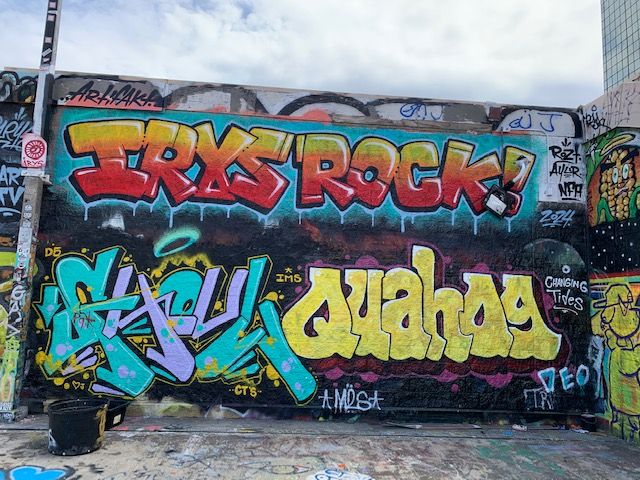
Street art has a long history. We can go back to the drawings on cave walls also known as pictographs. “What is street Art? History & Famous Artists” by Adam Hencz states that “People have been using natural surfaces to draw and paint on them since prehistoric times.” Since then we know street art to be something completely different. Today’s version originated in New York City and Philadelphia in urban neighborhoods on walls of abandoned buildings, subways, or any wall in public that was not being used. Reoccurring themes that are seen in street are political, intriguing, humorous, name tagging or just fun pictures.
With the origin and background that street art has it was looked down upon by many people back then and even today. For example, the article stated “Gangs of the 1920s and 30s of New York City would use graffiti and tag their names to establish dominance over a neighborhood. (Hencz)” Ever since then it has had a bad connotation. For instance, there is an extremely popular phone game that I played called Subway Surfers that was released in 2012, and the premise of the game is that your character is a street artist that is running on top of subways to get away from the police but it starts off as your character spray painting the side of train. Things like this game reinforce street art’s negative stereotypes.
There are positive things about street art and when I look around, especially Hartford, I see street art that is wanted. Street artists are getting paid or invited to spice up our neighborhood. For me personally I can say it makes me want to come outside and walk around more. According to “Why Public Art Is Good for Cities” By Marianne Dhenin, “Studies show that investments in public art can improve street safety, provide tourism and new jobs, and combat social isolation and anxiety.” Mitchell Reardon, an urban designer states public art spaces “make people feel represented, foster community ties, and give people a sense of ownership and belonging in their neighborhoods” (Dhenin).
Communities benefit from street art, and I think museums would benefit too. Not just museums but vice versa, the community benefiting from street art in museums. I say this because the class, race, age of people stereotypically associated with street art is different from the class, race, and age of people stereotypically associated with museums. Intertwining those different worlds together would make a diverse environment which is a terrific way to kill stereotypes. Artists like Hush agree as he said, “but its ethos still challenges the elitist atmosphere of galleries,” in the article (Randolph). When he says elitist atmosphere that is an example of what is stereotypically associated with museums. And the atmosphere surrounding street art will combat that.
In Randolph’s article Shepard Fairey says, “Anything that makes people think about their common humanity rather than selfish protectionism is very valuable for this moment.” On the other hand, I think twice about street art in museums because of the question “But can street art maintain that political relevance if it becomes too accepted by the elite?” (Randolph). I understand the hesitation because even when I look at political movements of today, they always start off with grass roots organizers and people that are directly being affected by the issues are the faces we see at the forefront but when they get mainstream the faces of movements change and it seems like people just start using the movement to look like a they are down with the cause. The same thing could happen with street art. Could someone allow it in their museums because they want to come off as supportive, but do they care about the message and understanding of art or do they just want attention?
After addressing the pros and cons of street art in museums, I understand the ambivalence the different street artists had because they saw both sides, like street art being in museums when it was overlooked in the past because of the environment it came from is what street art represents, like its need to rebel against what is accepted. The sense of rebellion it brings, and thought-provoking things could be good for people that visit museums. Then there is the other side that the more something is shown or happens, the more we normalize it, so it will not be as shocking or grab people’s attention as it once did. Which could lead to street art dying if it received an overwhelming amount of acceptance from mainstream establishments. Still, with everything said my final thought is that street art should be welcomed in museums.
Works Cited
Dhenin, Marianne. “Why Public Art Is Good for Cities.” YES! Magazine, https://www.yesmagazine.org/health-happiness/2021/12/06/public-art-cities. Accessed 24 Apr. 2025.
Hencz, Adam. “What Is Street Art? History & Famous Artists.” Artland Magazine, 28 Jan. 2022, https://magazine.artland.com/street-art/.
Randolph, Eric. “Does Street Art Belong In A Museum?” Barrons, https://www.barrons.com/news/does-street-art-belong-in-a-museum-2e0f4794. Accessed 24 Apr. 2025.
Course: ENGL 0960
Assignment: Textual Analysis
Instructor: Kevin Lamkins
Instructor comments: Betsy demonstrates her knowledge of the topic with a robust attention to context. In her analysis, I like her willingness to go beyond the conventional response or interpretations about street art and museums. She discusses the complexity and ambivalence of the issue, showing it’s not simply a yes or no proposition.
Photo credit: Kevin Lamkins


Leave a comment